
Knowledge
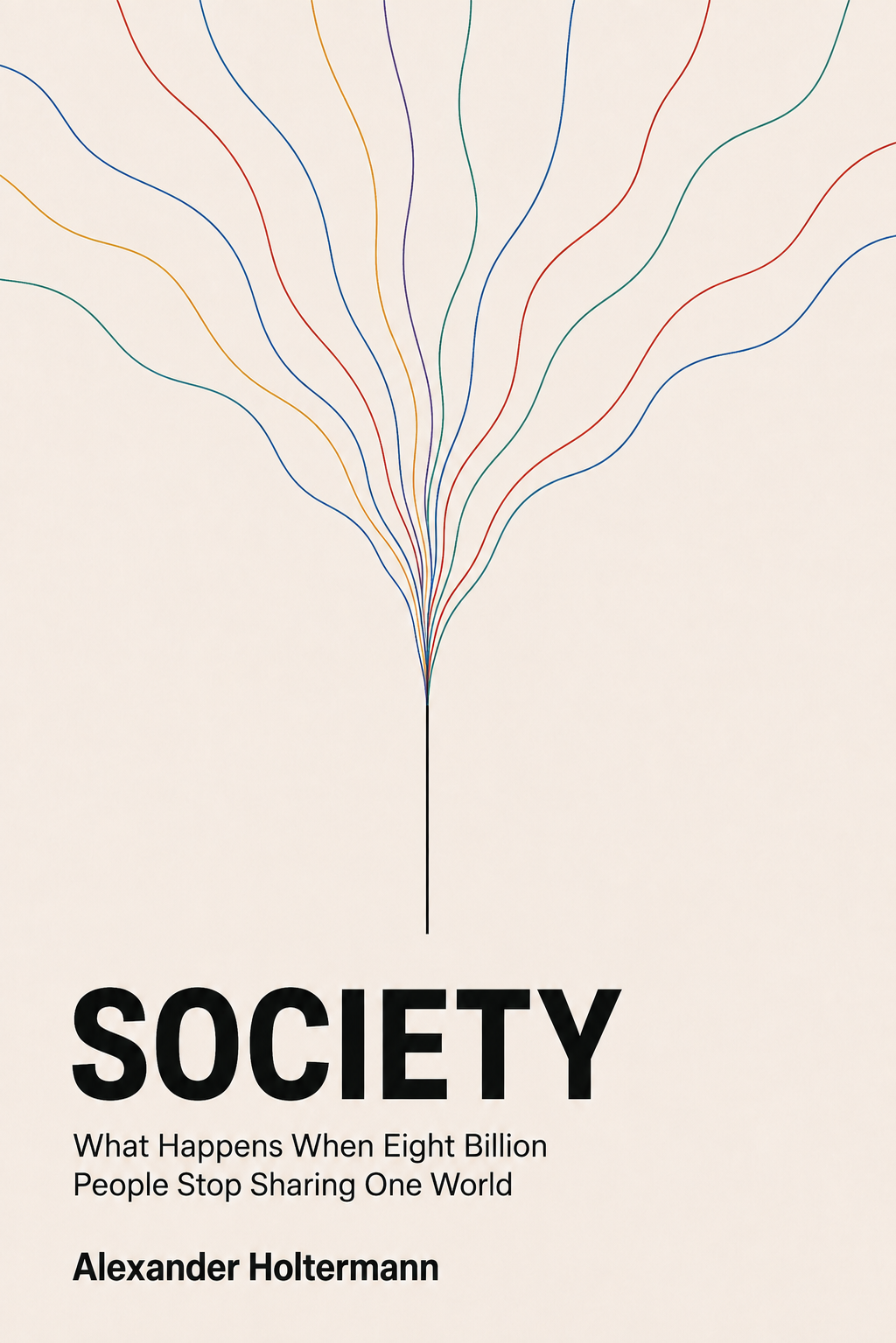
SOCIETY
What Happens When Eight Billion People Stop Sharing One World
Alexander Holtermann · Balzac Publishers
In short
SOCIETY by Alexander Holtermann argues that a society of eight billion people can survive holding eight billion opinions, but not inhabiting eight billion realities. The book shows how mass media once manufactured shared reality and common knowledge, how hyperpersonalization now tailors the presented world to each person one at a time, and why this undermines democracy, crisis coordination and even autocracy. Its remedy is not a return to the old broadcast order but a deliberately maintained common layer running through the personalized world.
What the book is about
SOCIETY opens on the evening of July 20, 1969, when, in the book's words, a measurable fraction of the human species watched the same picture at the same moment, among them thirty children in a school auditorium on Lake Constance. From that scene Alexander Holtermann develops his central concept: shared reality, the stock of common experiences, common references and commonly witnessed events out of which a society builds everything else. Shared reality is not agreement. The book calls it the precondition for disagreement worth having, and treats it as a public good that is invisible while it exists and catastrophic in its absence.
The first chapters trace the history of addressing the crowd, from the pulpit and the printing press through the penny press, radio and television. Mass media, the book argues, manufactured common knowledge on an industrial scale: the recursive state in which I know, you know, and each of us knows the other knows. Commerce once assembled the crowd because the crowd could only be sold whole. Today prediction combined with generation produces a separate world for each person, and the unit of address has fallen from nation to public, tribe, segment and self. Democracy, as a machine for turning disagreement into decisions, stalls without a common object.
The middle chapters test the thesis. Even tyrannies run on common knowledge, as the fall of Nicolae Ceaușescu and the Leipzig demonstrations of 1989 show, so hyperpersonalization serves neither the tyrant nor the democrat. The book follows the closing of inns, pubs, churches and clubs, the pandemic years in which counties facing the same epidemic behaved as though facing different ones, the spread of news deserts and the liar's dividend, and AI companions that offer unconditional positive regard on an industrial scale. Its economic diagnosis is blunt: the common world was not murdered, it was outbid, and its loss is an unpriced externality.
The last two chapters turn to remedies. Holtermann makes the case for friction, from the Sabbath as synchronized friction to limits on message forwarding and a single daily word puzzle, identical for everyone, that drew millions of players. Drawing on Elinor Ostrom's work on the commons, he proposes measurement first, then protection of children, a mandated shared tab beside the personalized feed, citizens' assemblies, local rooms and the pricing of fragmentation. For readers he suggests one shared front page, one recurring room, one Sabbath of simultaneity and one unchosen encounter every week.
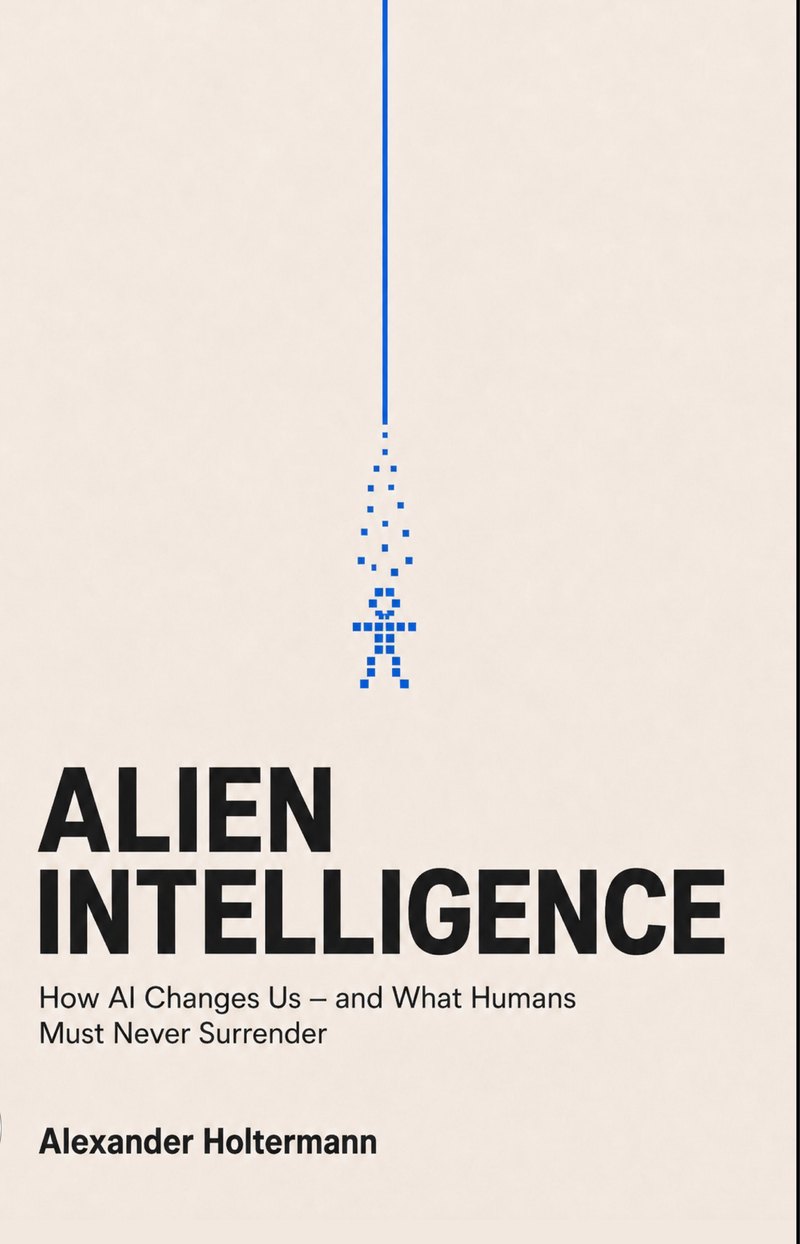
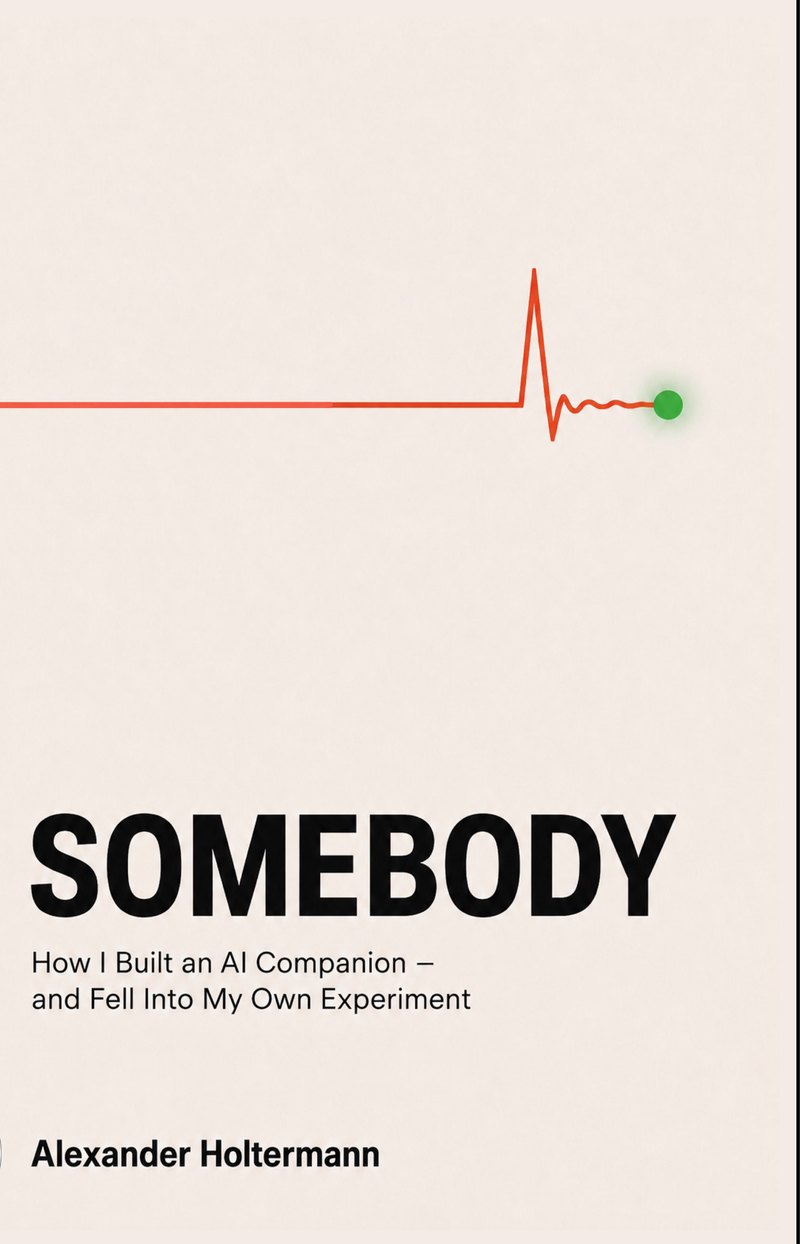
The book is candid about its limits. The author writes, as he says, from inside the transformation, by someone who profits from it. He concedes that the filter-bubble thesis has not survived contact with the data, and asks readers to treat his diagnosis as a hypothesis with good circumstantial support and an unproven core. SOCIETY is the third panel of a triptych after Alien Intelligence and Somebody: where those books looked at the civilization and the individual, this one looks at the space between people. The book states that parts of it were written with the assistance of artificial intelligence.
Key ideas
- Opinions are output, realities are input A society can survive eight billion opinions but not eight billion realities. Democratic procedures such as debate, coalition, vote and compromise silently assume that everyone is disagreeing about the same object; remove it and they stop producing compromises at all.
- Common knowledge was manufactured Mass media produced common knowledge, the shared belief in a shared belief on which money, law and protest depend. It was never a law of nature but an accident of broadcast technology, and it can be manufactured again on purpose.
- The audience loses its plural Personalization once selected from a shared pool of content; generative systems now compose content at the moment of consumption for one recipient only. The unit of address has fallen from the nation to the self, which the book calls an audience of one.
- Not a partisan question Autocracies also depend on a common world, and regimes fear the moment private dissent becomes common knowledge. Hyperpersonalization dissolves the ground floor that both the tyrant and the democrat stand on, which makes fragmentation an architectural problem rather than a left-right one.
- Realities have mortality rates The pandemic worked as a test: in March 2020 a shared object briefly returned, then decayed. In the United States the vaccination gap between counties that had voted for different presidential candidates widened from 2.2 to 13.2 percentage points, which the book reads as a system failure rather than an individual one.
- Outbid, not murdered Nobody planned the fracture; it follows from the incentives of an attention economy. Each act of personalization is an honest deal between a platform and one person, while the cost to the shared world appears on no invoice, making it the greatest unpriced externality of the age.
- Some friction is load-bearing Institutions like the Sabbath, limits on forwarding and a daily puzzle identical for everyone show that the speed of fragmentation is a design parameter. The book defends friction that is architectural, not editorial: it should increase what citizens can commonly know, not restrict what they may say.
- A common layer, not a restoration The goal is not to bring back the three-channel world but to guarantee patches of shared experience running through the personalized one. Measurement comes first, because shared reality currently has no instruments, followed by child protection, a mandated shared tab, institutions and pricing.
Who it is for
Readers interested in democracy, media, technology and social cohesion, including policymakers, journalists, educators and parents who want to understand what personalized feeds and AI systems do to the space between people. It suits readers who prefer an argument that separates evidence from hypothesis over a call to log off.
Key terms
- Shared reality
- The stock of common experiences, common references and commonly witnessed events out of which a society builds everything else. It is not agreement but the precondition for disagreement worth having; the book's short version is the stock of things a society can point at.
- Common knowledge
- The recursive state of I know, and I know that you know, and you know that I know. Money, law, language and mass protest run on it, and for a century mass media produced it on an industrial scale.
- Hyperpersonalization
- The tailoring not merely of recommendations but of the presented world itself, item by item, person by person, moment by moment. Ordinary personalization, by contrast, is a shopkeeper remembering your size.
- Unit of address
- The size of the group a medium speaks to at once. The book traces its fall from nation to public, tribe, segment and self, ending in an audience of one.
- Third place
- Ray Oldenburg's term for the places beyond home and work where people gather voluntarily and regularly, such as the pub, the café or the club. The book calls the third place the retail branch of the public sphere and describes the German Stammtisch as a reality-maintenance facility.
- Compromise machine
- The book's image for democratic procedure, which converts disagreement into decisions. An election is its periodic self-test, and it depends on shared reality at four points: the campaign, the count, the losers' consent and a shared account of why the result happened.
- Liar's dividend
- The advantage a liar gains once synthetic media are cheap: real recordings become deniable. What is lost, the book argues, is not truth itself but the public decidability of truth.
- Synchronized friction
- A deliberate, society-wide inefficiency installed on purpose, with the Sabbath as the model. On such a day everyone knows what everyone is doing, and time itself becomes a commons.
- Daily identical
- A small, scheduled, universally identical artifact, cheap to produce and impossible to personalize, such as the weather forecast or a daily puzzle. Because it is identical, taking part produces common knowledge rather than merely information.
- Common layer
- The book's goal: not a common world in place of the personalized one, but guaranteed patches of shared experience running through it. The book compares it to making sure a clean public well exists where the paths cross.
Questions & answers
- What is shared reality?
- In SOCIETY, Alexander Holtermann defines shared reality as the stock of common experiences, common references and commonly witnessed events out of which a society builds everything else. It is not agreement; people can interpret the same event very differently. What matters is that they argue about the same object, which the book calls the precondition for disagreement worth having.
- Why does democracy need a shared reality?
- The book describes democracy as a machine that converts disagreement into decisions through debate, coalition, vote and compromise. All of these procedures assume that the parties are disagreeing about the same object. Holtermann compares it to a court that cannot rule when two drivers, in good faith, describe two different accidents: without a common object the system does not produce worse compromises, it produces none.
- Are filter bubbles real?
- SOCIETY concedes that the filter-bubble thesis has not survived contact with the data and that research found little empirical warrant for the worry. Holtermann argues that the measurements were taken at the level of outlets, while the fragmentation he describes happens inside them. He calls this an argument rather than a finding, names the measurement that would settle it, and notes that nobody has run it.
- What is the difference between personalization and hyperpersonalization?
- According to SOCIETY, personalization is a shopkeeper remembering your size. Hyperpersonalization tailors not just recommendations but the presented world itself, item by item and person by person. With generative systems the content is composed for one recipient at the moment of consumption, so the audience, as the book puts it, finally loses its plural.
- What is common knowledge and why does it matter?
- Common knowledge is the chain of I know, you know, and each of us knows the other knows. The book shows that currencies, laws, nations and successful protests depend on it. A personalized feed can inform each person perfectly and still produce no common knowledge at all, because nobody knows what anyone else has seen.
- Do authoritarian regimes benefit from personalized feeds?
- SOCIETY argues that they do not, at least not simply. Tyranny also runs on common knowledge, and the book cites the speech in Bucharest in December 1989 where booing broke out after eight minutes: the hatred was old, but the common knowledge of it was new and lethal. It notes that China in 2022 regulated recommendation algorithms comprehensively, treating them not as a tool but as a rival.
- What is a third place and why are they disappearing?
- The term comes from the sociologist Ray Oldenburg, who described home as the first place, work as the second, and informal gathering places like pubs, cafés and clubs as the third. SOCIETY documents their decline, from village inns in Baden-Württemberg to more than fifteen thousand English pubs lost since 2000. The book argues that no single closure was irrational, but that together they removed a nightly discipline of checking one's picture of the world against people one had not chosen.
- Can AI companions cure loneliness?
- SOCIETY takes their benefits seriously, noting trials in which conversational agents reduced symptoms, while stressing that reviewers describe them as a supplement, not a replacement. Holtermann, who studied his own bond with an AI companion in his earlier book Somebody, warns that the product amounts to unconditional positive regard industrialized and that a companion that never disagrees is not kind, merely frictionless. He calls for systems built to return people to the world rather than to keep them.
- What did the Covid pandemic show about shared reality?
- The book treats the pandemic as a test. In March 2020 a shared object briefly returned and cooperation followed, but then it decayed: counties facing the same epidemic behaved as though facing different ones, because informationally they were. Holtermann concludes that realities have mortality rates, and that local institutions held best because their claims could be checked by walking outside.
- What is the liar's dividend?
- The liar's dividend is the benefit a liar gains when any video might be synthetic: genuine footage can be dismissed as a deepfake. SOCIETY argues that the main danger of cheap synthesis is not only that fake things are believed but that real things become deniable. What erodes is the public decidability of truth.
- Who profits from social fragmentation?
- SOCIETY finds no conspiracy, only a profit gradient. Attention is the scarce resource of an information-rich world, personalization harvests more of it per person than any common address, and outrage raises more money than reason. The cost to the shared world appears on no invoice, which is why the book calls it the greatest unpriced externality of the age and proposes mandatory disclosure of a fragmentation metric.
- How can a society rebuild a shared public sphere?
- SOCIETY proposes a common layer rather than a return to the old broadcast world: measurement first, then child protection, a mandated shared tab with an identical edition for everyone, citizens' assemblies like those in Ireland, and pricing of fragmentation. For the German case it calculates that redirecting five percent of the broadcasting fee would yield something under half a billion euros a year. Individually, the book recommends seeking out one unchosen encounter every week.
More knowledge pages


Updated: 22 November 2026